Archives
- 2026-06
- 2026-05
- 2026-04
- 2026-03
- 2026-02
- 2026-01
- 2025-12
- 2025-11
- 2025-10
- 2023-07
- 2023-06
- 2023-05
- 2023-04
- 2023-03
- 2023-02
- 2023-01
- 2022-12
- 2022-11
- 2022-10
- 2022-09
- 2022-08
- 2022-07
- 2022-06
- 2022-05
- 2022-04
- 2022-03
- 2022-02
- 2022-01
- 2021-12
- 2021-11
- 2021-10
- 2021-09
- 2021-08
- 2021-07
- 2021-06
- 2021-05
- 2021-04
- 2021-03
- 2021-02
- 2021-01
- 2020-12
- 2020-11
- 2020-10
- 2020-09
- 2020-08
- 2020-07
- 2020-06
- 2020-05
- 2020-04
- 2020-03
- 2020-02
- 2020-01
- 2019-12
- 2019-11
- 2019-10
- 2019-09
- 2019-08
- 2019-07
- 2019-06
- 2019-05
- 2019-04
- 2018-07
-
PF 4800567 hydrochloride Plasminogen is composed of five
2021-01-18
Plasminogen is composed of five N-terminal kringle domains and a C-terminal serine protease domain. The kringle domains have an affinity to lysine and binding of plasminogen with its receptors is dependent on its lysine interacting kringle domains [10], [28]. In the current report, we show that enol
-
Pol is responsible for the bulk of
2021-01-18
Pol ε is responsible for the bulk of leading-strand synthesis in vivo (Daigaku et al., 2015, Nick McElhinny et al., 2008, Pursell et al., 2007) and physically associates with CMG (Langston et al., 2014, Sengupta et al., 2013, Sun et al., 2015, Zhou et al., 2017). Furthermore, leading-strand synthesi
-
Various domains of DDR have been shown to be
2021-01-18
Various domains of DDR1 have been shown to be important for receptor clustering and its oligomeric status. It is now understood that (i) dimerization [7] and higher-order oligomerization [12], [18] of the DDR1 extracellular domain (ECD) enhance its binding to collagen; (ii) DDR1 exists as non-covale
-
The positive correlation between ATG and
2021-01-18
The positive correlation between ATG7 and DCTPP1 (TCGA data) suggested our hypothesis that DCTPP1 may affect the phenotype of prostate tumor, or maybe other types of tumors as well, through its role in autophagy. To test this hypothesis, we carried out western-blot experiments in which the ratios of
-
In the present study it was found that HepG
2021-01-18

In the present study, it was found that HepG2, H4IIE and LMH cells were inclined to remove S-metalaxyl and lead to decrease of ERs of metalaxyl, while L8824 cells were inclined to attenuate R-metalaxyl and resulted in an inverse shift of ER. These findings indicate the enantioselective accumulation
-
Steady state mRNA levels of CYP A isoforms were not
2021-01-18
Steady-state mRNA levels of CYP3A isoforms were not changed during liver insufficiency. Suppression of these isoforms was observed only at the protein and activity levels, suggesting a nongenomic mechanism of CYP3A isoform downregulation during liver insufficiency. Nonetheless, transcriptional activ
-
An intriguing feature of the pre and postsynaptic
2021-01-18

An intriguing feature of the pre and postsynaptic processes at the level of the VTA that have been shown to be mediated by CRF2 receptors [9], [34] is that they are exerted only by agonists with high affinity for both CRF2 receptors and CRF-BP. The four endogenous peptides of the CRF system have hig
-
Furthermore many intermediate plants did not show additive
2021-01-18
Furthermore, many intermediate plants did not show additive combinations of parental allozymes, which would be expected in F1 hybrids. The absence of some characteristic parental bands suggests that sexual reproduction has occurred among the hybrid plants. Genetic variations within and among the int
-
br Study br Study meta
2021-01-18
Study 1 Study 2: meta-analyses Discussion Ten studies have examined the associations of 5-HTTLPR and COMT Val158Met with alexithymia. However, the findings were mixed. In this study, we found that neither the 5-HTTLPR nor COMT Val158Met is associated with alexithymia. The previous findings
-
Previously we have shown that the
2021-01-15
Previously, we have shown that the overexpression of ERRγ induces exercise-like oxidative muscle remodeling without engaging changes in the expression level or activity of PGC1α (Narkar et al., 2011). In this study, overexpression of ERRγ in PKO muscle reveals that ERRγ-activated target genes can ac
-
br Material and methods br
2021-01-15
Material and methods Results and discussion Conclusions Prostanoid-E receptor selective antagonists that inhibit EP2 or EP4 receptor activities may be used as a pharmacological strategy to limit cyst formation and ADPKD progression. Our study follows on from our previous observations of the
-
MI has been detected in wastewater at concentrations of
2021-01-15
3MI has been detected in wastewater at concentrations of 640–700 μg L−1 (Hwang et al., 1995) and up to 20 mg L−1 in decaying algal water environments (Peller et al., 2014). It is likely that 3MI accumulation in fish might be due to the degradation of endogenous amino acids. The presence of this ch
-
br Conclusion br Acknowledgment The authors would like
2021-01-15
Conclusion Acknowledgment The authors would like to thank “Science and Engineering Research Board (SERB) of Department of Science and Technology (DST) Govt. of India” (Grant No.YSS/2015/002017) for funding the project. Introduction Mutations occurring within EGFR exons 18 to 21 are present
-
br Materials and methods br
2021-01-15
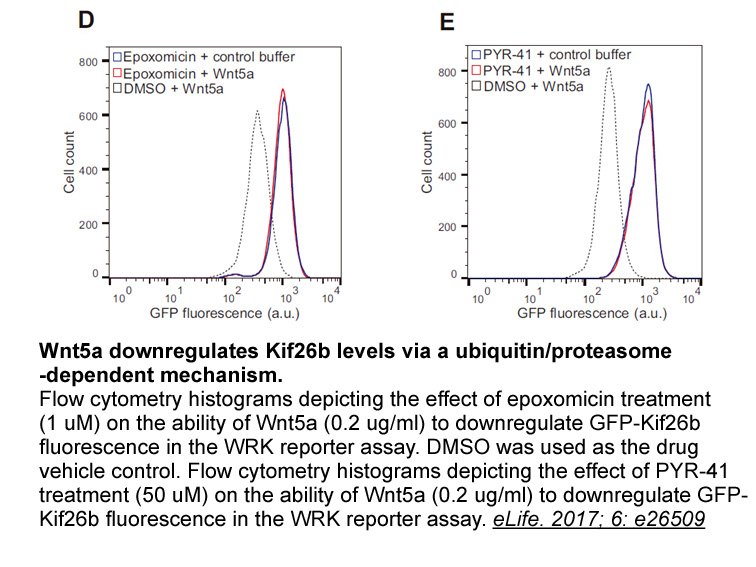
Materials and methods Results Discussion PYR-41 inhibits UBE1 activity that catalyses an initial step in the ubiquitination reaction. In the present study, we examined the role of this enzyme in sperm-egg fusion by inhibiting UBE1 enzymatic activity in eggs. Our results suggest that PYR-41
-
Recent results from our group found that
2021-01-15
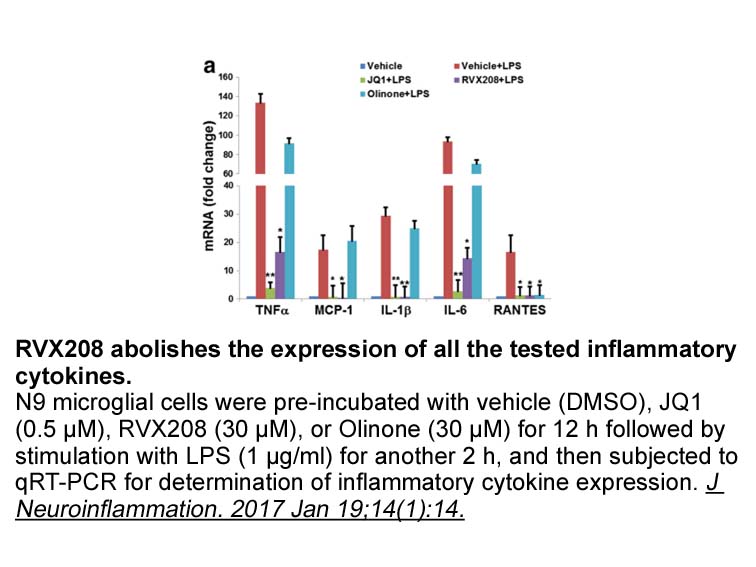
Recent results from our group found that SPMs, not only play a part in terminating inflammation, but also have a physiological role in conjunctival goblet ion channel to maintain ocular surface health in the absence of disease. Amongst the SPMs that are effective in the conjunctiva are resolvin D1
11544 records 439/770 page Previous Next First page 上5页 436437438439440 下5页 Last page